Targeting high-impact deep tech sectors, a new institutional alliance provides female founders with physical infrastructure, market linkages, and a vital investor pipeline.
 Brajesh Mishra
• What happened: BML Munjal University's Propel Incubator and early-stage platform Ideabaaz have partnered to launch a specialized 12-week accelerator program for women-led tech startups.
• Why it matters: The joint initiative targets severe scaling bottlenecks and the massive venture capital funding gap, taking female founders from early-stage MVPs to market-ready growth.
• The strategic play: Aligning with NITI Aayog's policy directives, the cohort focuses on high-impact innovations across the Agri-Tech, Health-Tech, and Edu-Tech landscapes.
• India's stake: The program offers a crucial "credibility shield" using a premier university framework to de-risk female-led deep tech products before they meet mainstream investors.
• The deciding question: Will a direct pipeline to top-tier venture firms on Demo Day effectively force active capital networks to evaluate these startups purely on scalability and merit?
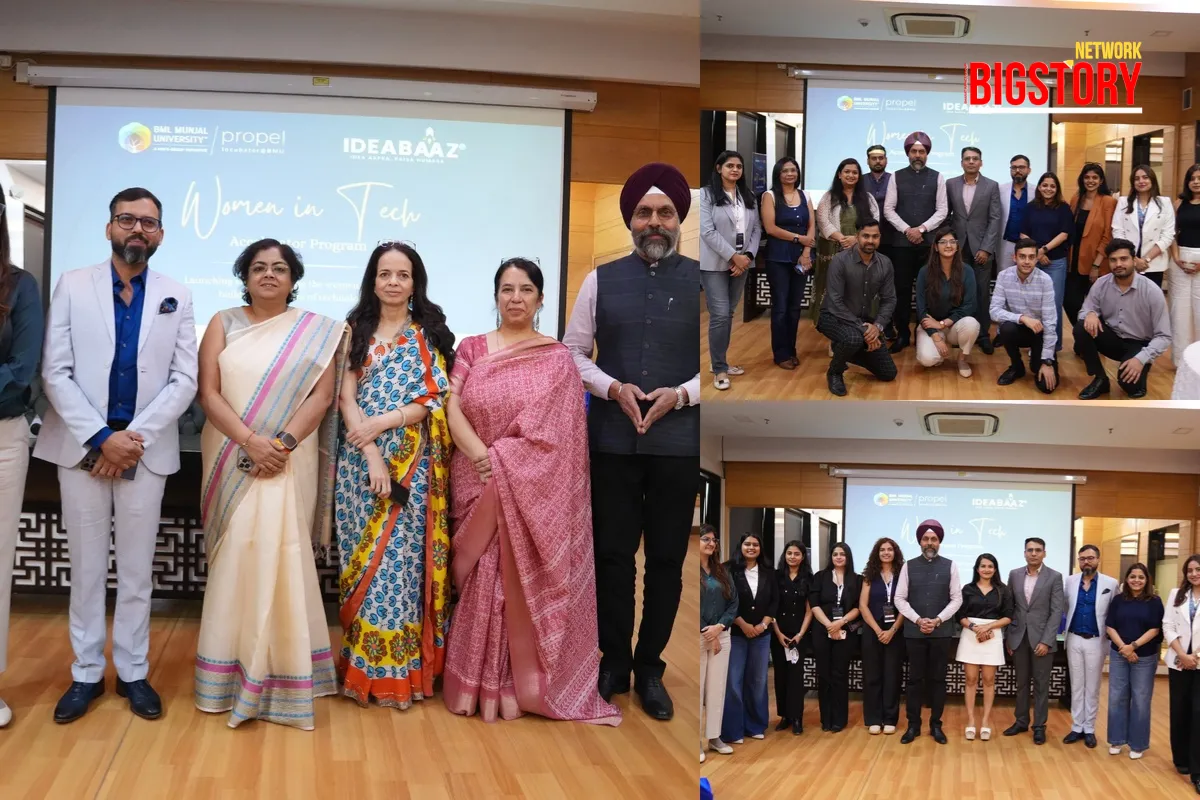
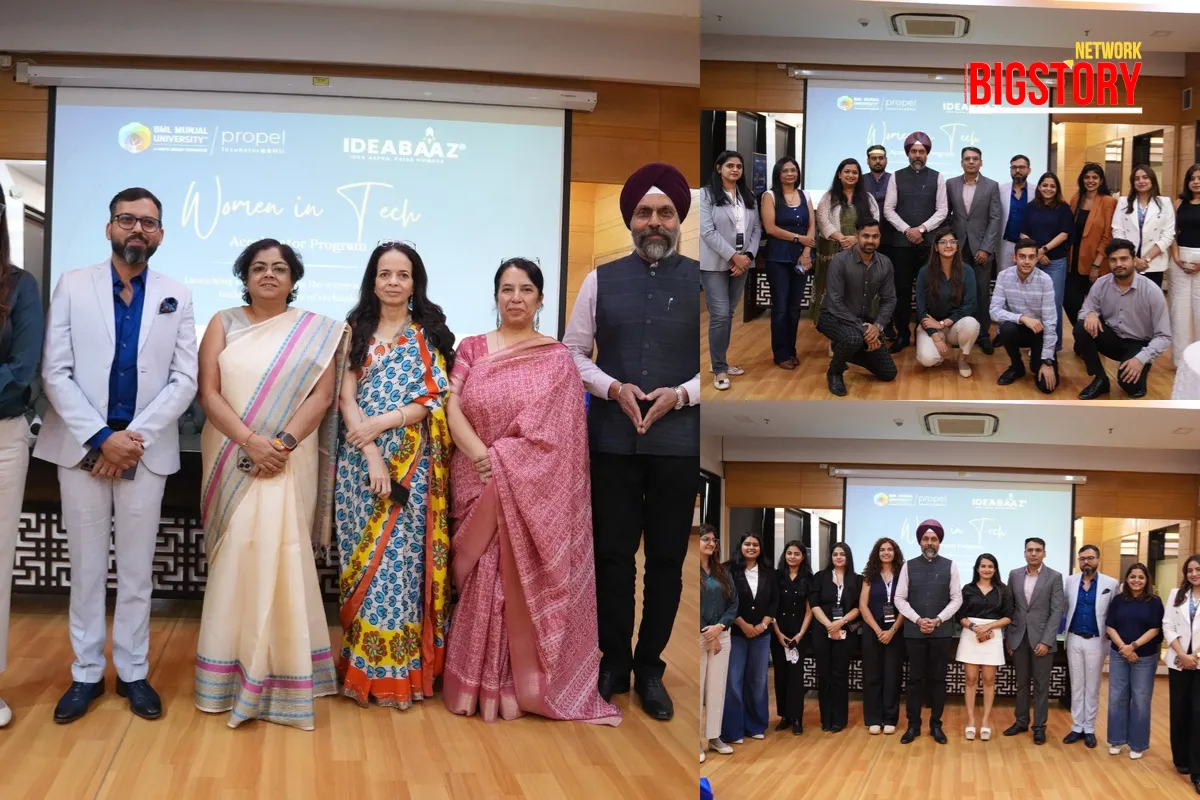
A major institutional push to accelerate women-led innovation in India's deep-tech and startup landscape has gone live. BML Munjal University (BMU), through its Propel Incubator, has partnered with early-stage startup community and platform Ideabaaz to launch a specialized 12-week accelerator program specifically designed for women-led tech startups.
The joint initiative focuses heavily on providing structured mentorship, technical infrastructure, and direct investor access to help women entrepreneurs scale their ventures from early-stage Minimum Viable Products (MVPs) to commercially viable enterprises.
Selected startups will undergo rigorous operational modules covering product-market fit, scalable tech architecture design, financial modeling, go-to-market (GTM) strategies, and complex legal compliance frameworks. BMU's Propel Incubator will provide participants with physical and digital lab infrastructure, research support, and equity-free incubation resources, while Ideabaaz drives market linkage and ecosystem networking.
The launch aligns closely with current policy directives coming out of New Delhi. In a concurrent economic address, NITI Aayog's Dr. Vinod Kumar Paul and senior policy advisors heavily emphasized that India's next economic surge relies on leveraging advanced technologies to solve grassroots problems.
The BMU-Ideabaaz accelerator is actively targeting women founders working across three primary, high-impact sectors:
• Agri-Tech Solutions: Harnessing Artificial Intelligence (AI) and IoT to address soil health, predictive crop analytics, and supply-chain transparency for Indian farmers.
• Health-Tech & Med-Tech: Developing accessible diagnostic tools, remote patient monitoring systems, and localized digital healthcare delivery.
• Edu-Tech & Skill Development: Creating adaptive learning platforms to solve educational disparities and regional language skill gaps.
The program culminates in an exclusive Demo Day, where graduating women founders will pitch their refined business models directly to top-tier venture capital firms, angel syndicates, and corporate investment houses for immediate seed and growth funding.
While mainstream coverage will highlight this program as a routine diversity or corporate social responsibility (CSR) initiative, the "Missed Angle" is the harsh funding reality this accelerator is designed to combat.
Despite massive nominal growth in India's broader startup ecosystem, global venture capital data from early 2026 indicates that women-led startups still attract less than 3.5% of total venture capital funding in India. Furthermore, female founders frequently face systemic, unconscious bias during early-stage valuation pitches.
By structuring a dedicated 12-week safety net backed by a premier university, BMU and Ideabaaz are attempting to completely de-risk these startups before they step into the public market. Providing institutional backing from an academic framework acts as a vital "credibility shield." This shield pressures mainstream venture capitalists to look past demographic biases and evaluate these deep-tech products purely on technical merit, operational unit economics, and scalability.
 Exclusive Content






Sign up for the Daily newsletter to get your biggest stories, handpicked for you each day.



 Trending Now! in last 24hrs